
APT Reading List: Dramaturg Rising — You Need Me In The Room
Erica Brennan is a writer, performer, director and creative producer living on Gadigal Land. In 2025 Erica was part of Australian Plays Transform’s Developing the Dramaturg program.
In this article, read about how Erica’s dramaturgical skills evolved during her time as well as her relationship to audacity and the power of putting your hand up.
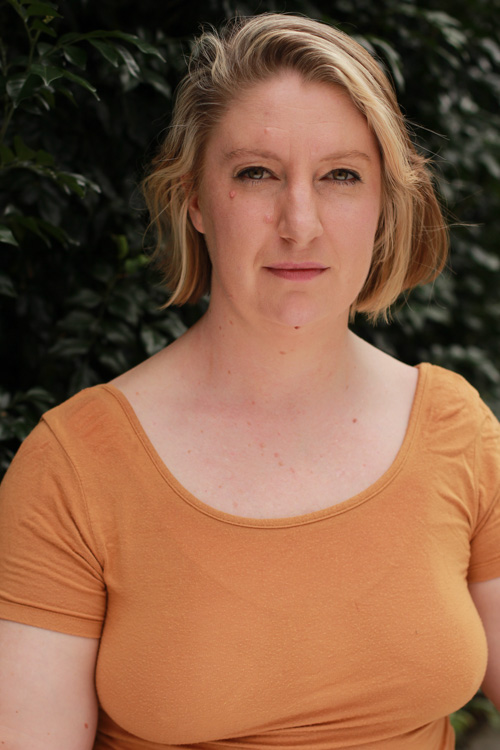
I’ve been thinking about audacity in the independent arts sector. Who gets encouraged to have it, who doesn’t, and how it turns toxic without care, integrity, or community. Every artist who survives this industry carries at least a little of it. Some Audacity is required to dare put pen to paper or step into a rehearsal room with a vision. Lately I’ve been asking myself: how can we wield it for collective growth?
When I applied for APT’s Developing the Dramaturg, no one recommended me. I submitted on my own initiative, driven by the desire to be in the room, learn, and add value. I had enough audacity to believe I was a talent worth training.
I was offered a placement with National Theatre of Parramatta (NToP). A return to Western Sydney, where I first studied theatre making and where diverse voices shape the cultural landscape. The program offered four weeks’ equivalent of full‐time placement (which I split across six months) a weeklong intensive exploring dramaturgy through a non-colonial lens. It asked us to imagine development practices that genuinely match the diversity of stories needing to be told. All hours were paid, and APT brokered mentoring with an industry leader of our choice.
After fifteen years as a theatre-maker, I had a solid sense of the dramaturg’s role once inside collaboration. The intensive helped me see that my practice, grounded in compassion, ethics, and flattening hierarchy, is a valid, necessary authorship. It is deeply connected to my cultural knowledge yet not always championed or practiced within institutional conventions. I hadn’t articulated this before. I hadn’t known I needed to.
I realised, too, that I needed opportunities to work quickly and be heard in decision-making spaces. I needed my skills to become legible; not just employable (Arg capitalism), but vital.
Oh, the (growing) audacity.
At NToP, I asked Artistic Director Joanne Kee to assign me the assessment of every script she had. I wanted to understand how a company weighed work against programming priorities. I also asked APT to secure mentorship with Jane Harrison, whose work as a writer and dramaturge embodies a profound synthesis of contemporary insight and ancient knowledge.
Those months of placement changed me. Script assessment demanded precision, speed, and clarity. Reading so many works sharpened my instincts and taught me to frame feedback as generous questions rather than pronouncements. Curiosity emerges as the core of my dramaturgical voice.
Working on NToP’s Page to Stage program deepened this further, one-on-one dramaturgy with writers navigating the vulnerable alchemy of new work. I brought what I now understand as my strengths: practical optimism, a clear intuition for what a piece is trying to say, and a repertoire of ways to help it settle, sharpen, or expand.
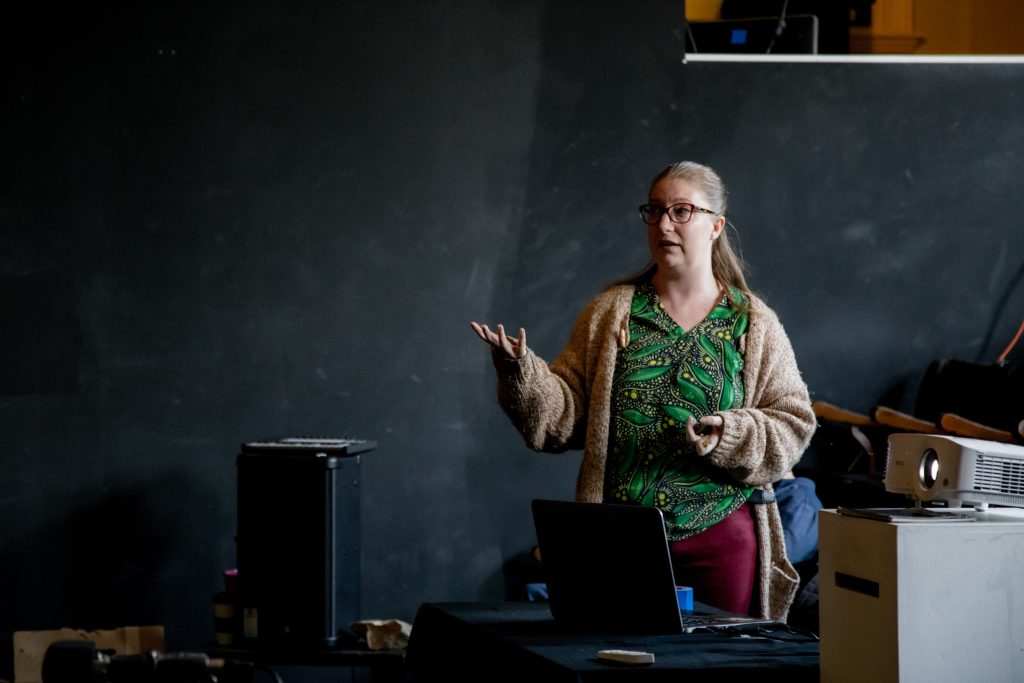
My mentorship with Jane provided the beginnings of a formal methodology. A framework for organising instinct, observation, and provocation into something communicable.
The most transformative moment arrived at the end of my time with NToP: being invited to contribute to future programming discussions. Sitting in that room, I felt the click of recognition; my clarity, instincts, and leadership were not just useful. They were needed.
This placement affirmed that dramaturgy is more than a rigorous craft. It is the art of balancing risk with care, of listening deeply, thinking strategically, and championing brave imaginations. I now understand my dramaturgical voice as both instinctive and analytical, shaped by years of collaboration, somatic practice, and community-held storytelling.
I am so grateful for the people and spaces that shaped my through this opportunity as I emerge even more ready for the work ahead.
And with my whole chest; yes, you need me in the room.